FABLAB
Try FabLab ↗Web-Based Design-to-Fabrication Platform
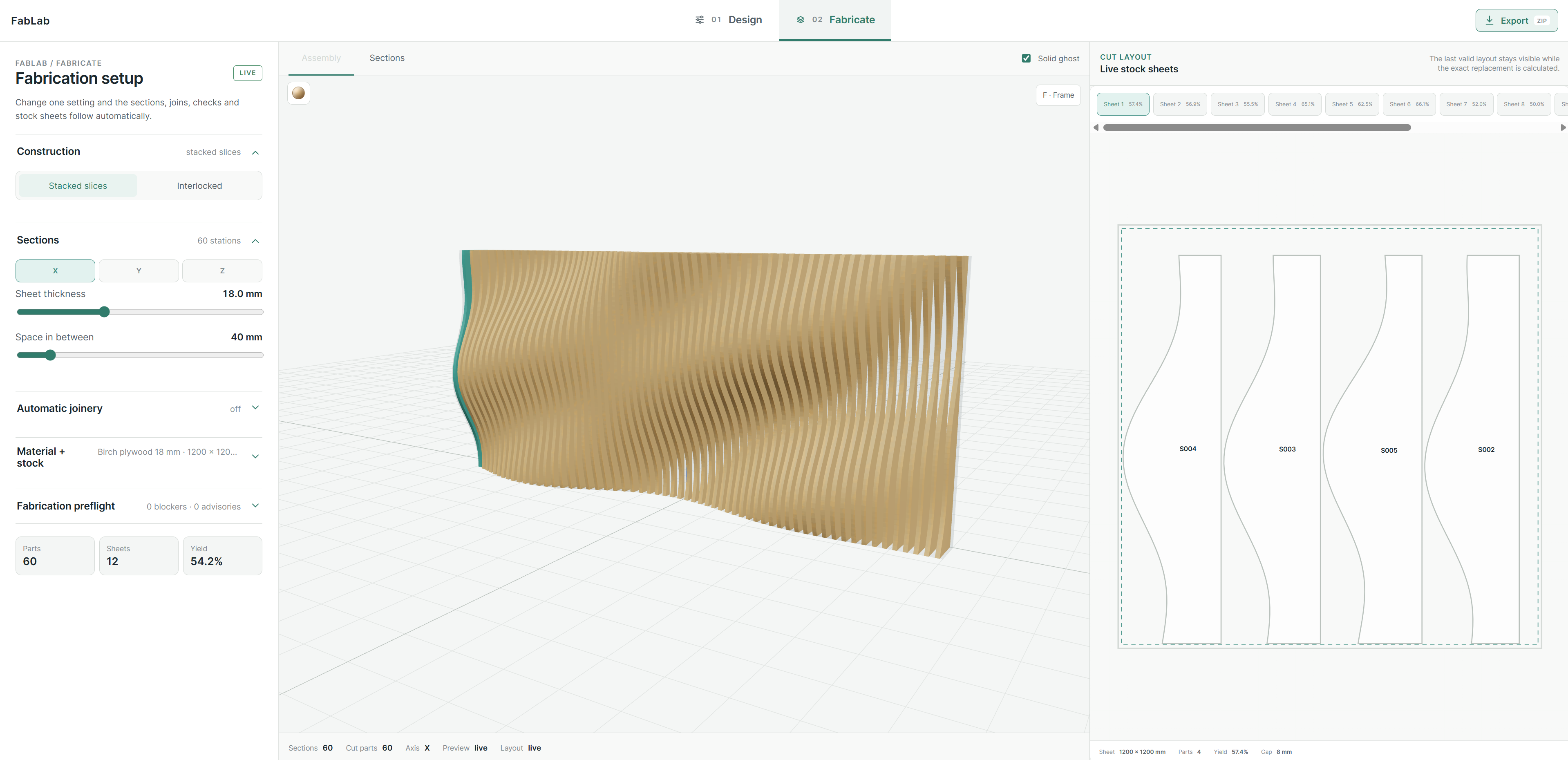
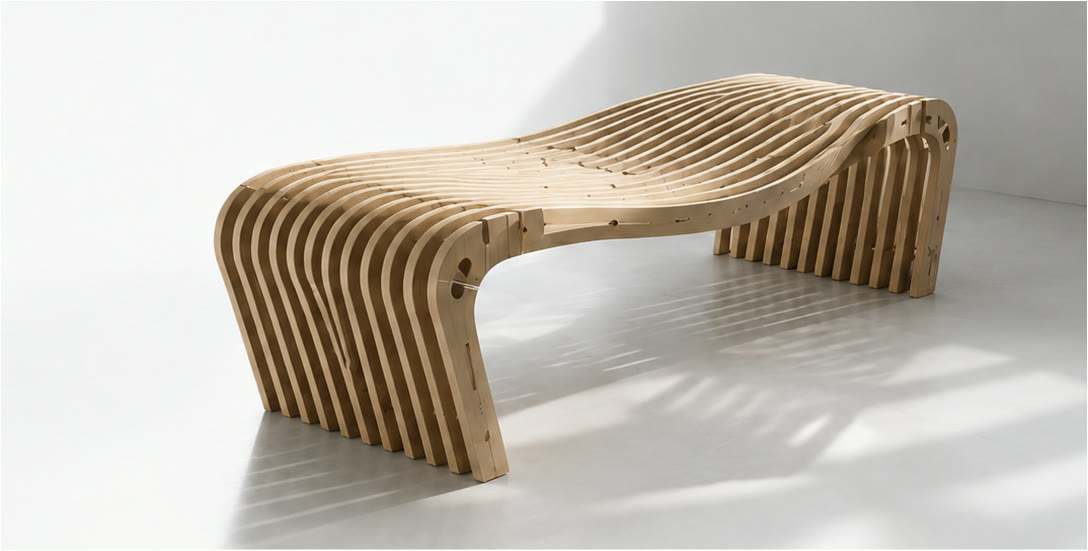
FABLAB is a browser-based design-to-fabrication environment for sectional objects made from sheet materials. I designed and built it as one continuous product workflow: model or import the form, define how it is constructed, then keep sections, materials, joinery, nesting, preflight, and manufacturing outputs synchronized as the design changes.
- Type
- AEC · Web 3D
- My role
- Product Designer · Creative Technologist, end to end
- Stack
- React · Three.js · WebAssembly · DXF/SVG export
- Live
- Open ↗
Brief
Objective. Create a fast browser-native workflow that connects 3D form-making directly to fabrication instead of forcing designers to rebuild the same project across disconnected CAD, slicing, nesting, and export tools.
Challenge. The geometry, section logic, material data, joinery, sheet layout, validation, and exports all have to stay consistent while the model is still being edited, without turning the interface into a legacy multi-step CAD/CAM wizard.
One authoritative 3D model
Surface modeling, editable spline sections and paths, modifiers, and imported STL/OBJ/GLB/3MF geometry converge on one canonical millimetre solid.
Direct editing stays visual while numeric controls preserve precision.
Reactive fabrication
Fabrication is derived from the same model rather than recreated manually.
Parallel and waffle sectioning, material thickness, joinery, registration hardware, preflight, and sheet placement update from the current project state.
Manufacturing-ready outputs
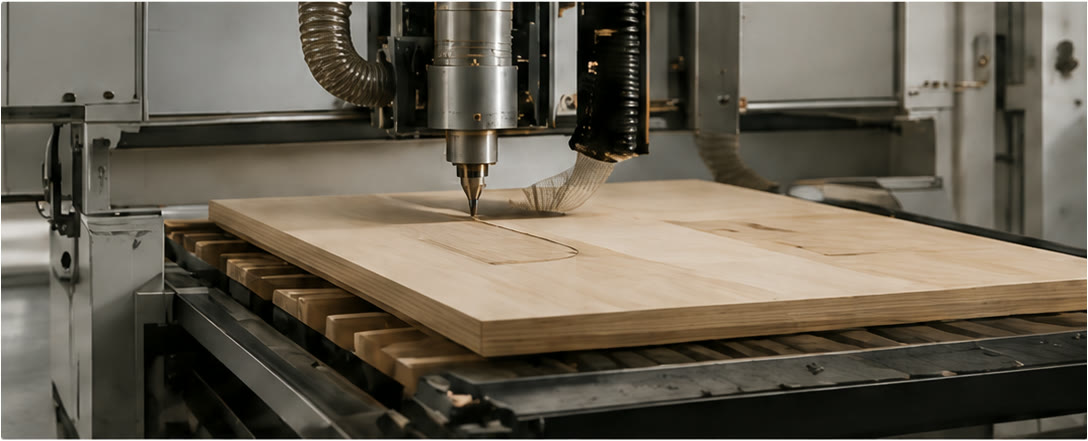
The system produces sheet layouts, SVG and AutoCAD R12 DXF files, BOMs, manifests, hardware schedules, assembly information, utilization, and waste data while keeping validation limits explicit.
Reflections
The product is the workflow. Treating Design and Fabricate as two views of the same project truth removes repeated setup and makes the software feel immediate rather than procedural.
Validation stays explicit. Software checks can establish internal consistency, but CNC accuracy and assembly fit still require CAD/CAM comparison and physical testing. The product keeps those confidence boundaries visible.
Try FabLab ↗